

The flame
Character Wins the Long Game
This month, FISLL explores how character is built in real time — through Allan Houston’s “Five C’s,” Molly Sweeney’s journey back to peace in the pool, and Daniel Riley’s moving essay on the virtues that continue to shape his life and leadership.
FISLL founder Allan Houston spoke at the third annual Knoxville Summit in Knoxville, Tennessee, on April 23. The summit is an event in which leaders and athletes gather to receive tools and wisdom to enhance their impact in the world.
Houston encouraged his peers with the “Five C’s”: Be confident in your ability. Be consistent with your behavior. Be committed to personal growth and development. Be connected to service. Be conscious of your impact and presence.
Hear more about the “Five C’s” from the former Tennessee basketball star in May’s edition of ‘Allan’s Thoughts.’
“Be confident in your ability. Be consistent with your behavior. Be committed to personal growth and development.”
Allan’s Thoughts
The Five C’s of Coachable Leadership
Word from the youth
Faith Beyond the Finish Line

Molly Sweeney is the fifth-ranked swimmer in the nation’s class of 2026. A senior at Carmel High School in Carmel, Indiana, Sweeney will swim at Tennessee starting this fall. Sweeney almost quit the sport in 2025 following a battle with overtraining syndrome. Sweeney persevered through faith and experienced a turning point in Dec. 2024 at the Winter Junior National Champions. After discovering her identity was much more than swimming, but rooted in her faith in God, Sweeney was at peace. Sweeney went on to win three state titles in 2026, bringing her career total to 13, the fifth most in Indiana history.
“And I just hear God’s voice so clearly saying, ‘Molly, you need to be patient, your time is coming,’” Sweeney said of the time at junior nationals. “And I’ve never been one just to sit there and listen. I’m very outgoing — even in prayer, I feel like I’m often doing most of the talking instead of letting God speak to me.
“But in that moment, I just felt even if I don’t make this team, what I went through this year and what I did to get here, and the fact that I’m swimming in this meet is enough for me. I don’t need to make a team to prove that to myself. And once I got in that mindset, it just was so much better.”
Featured story
FISLL’s impact: A Journey Through the Virtues of Life
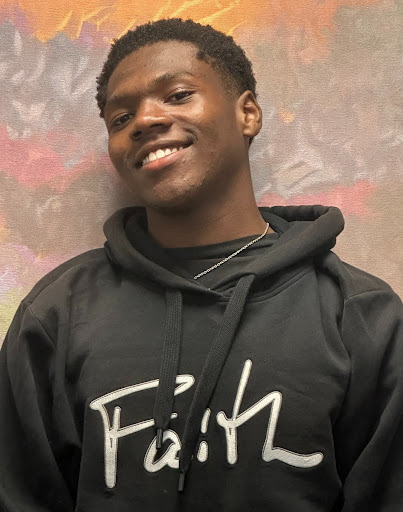
Throughout my time in FISLL, I’ve grown as a leader, a human, and as a testament to the power of these fundamentals. Inspired to turn my personal growth into a transformative piece of writing, I collaborated with my mentor, Barry Woods, to reflect on the impact of FISLL on the individual. The FISLL fundamentals transform individuals by fostering intentional self-reflection on character, strengthening their bonds with their communities, and cultivating a better perspective on life.
To begin, Faith fosters intensive self-reflection on character by teaching individuals to trust their personal journeys. The teachings of FISLL give aspiring leaders a sense of understanding that there’s more to them than they originally thought. The fundamental faith is beyond just having faith in themselves; it is having faith in the process that can get them to where they wish to be in life. Throughout my life, I have been through many situations that tested my leadership, but the main belief that helped me through was remembering my faith in the process. It’s more than just having faith in oneself; however, it’s also realizing that faith comes from other sources, which could be family, the community, or even other leaders placing their faith in others to pursue what’s needed to better themselves. While faith provides individuals with the guidance to look within themselves, Integrity provides the measure that tests their ability to act for themselves. Integrity deepens understanding of individuals’ own character by teaching them to operate at a higher standard, even when no one else is watching. One of the main teachings that FISLL instills into its aspiring leaders is that actions speak louder than words. Something my mentor, Barry Woods, always stresses is “Showing instead of speaking.” I’ve taken these words to heart because of the mindset I’ve adopted since joining FISLL. I gained a deeper understanding of what Integrity means and how it benefits my overall spiritual health. Operating at a higher standard of life means more than doing what is ‘right’; it’s about doing what’s right for one’s own beliefs. FISLL helps people understand themselves to the point where they grow beyond needing to “prove” their own growth. Their own actions are what prove their transformation.
Secondly, Sacrifice strengthens their bond with the community around them by empowering them to take ownership of their own life’s direction. This fundamental is about making intentional decisions and understanding the process by which they are made. It takes the most strength of all to know what they’re sacrificing and what letting go can unlock for themselves. Building a bond with the community comes with the Sacrifice of time and even more. FISLL provides the nurturing they need to look further into their lives and know that their Sacrifice is the right one. A belief I have instilled in my psyche is that of “giving of myself” to another person. This belief means I can dedicate a portion of my life and my virtue to another who needs them more. Sacrifice takes effort and the ability to look beyond themselves. It’s about knowing that no matter what they have going on, someone else needs their help more than they’ll ever understand. They give a piece of themselves to the community, and the burdens from their minds are renewed through the strength and trust of those around them.
In the FISLL framework, Sacrifice is removing a piece of themselves to transform for the better, while leadership is adding a piece of themselves onto someone else. Leadership forges strong community bonds by lifting those in need of guidance. Through time in FISLL, I’ve found that the perfect definition of this fundamental comes from “The Fundamentals of Life Handbook,” created by Allan Houston. This handbook defines leadership as “Inspiring individual and collective motivation towards a specific and common goal.”
For aspiring leaders, those common goals can take many different forms, with the beauty of the FISLL mindset being its encouragement of those mixing the fundamentals with their own values.
Leadership takes more than just the necessary mental strength; it also requires the strength of character to feel deeply for those in need. It’s about looking over those who can’t process any part of life that isn’t directly in front of them. This fundamental requires the courage to recognize when it’s time for a leader to “give a piece of themselves” to another or when their leadership simply isn’t an option for that situation. The biggest quality of this fundamental is the ability to go back to the drawing board and reflect on what they could do to rebuild, learning from previous setbacks. Leaders are expected to have understood every other fundamental up to this level, effectively putting the three previous to work in aiding the community around them. The most important aspect of leadership is building the next generation of leaders. As the cycle of aspiring new leaders continues, older leaders can use their knowledge and diverse perspectives to create something greater.
Last and most importantly, Legacy encourages individuals to reflect on their life’s work, transforming past lessons into a source of uplift, purpose, and closure. To quote from “The Fundamentals of Life Handbook,” once again, Legacy is, “Awareness and pursuit of one’s impact on humanity, society, and eternity.” As wonderfully crafted as Allan Houston’s definition was, I have my own personal definition of this fundamental, which differs from his. The definition of Legacy that I’ve lived by is, “what have I crafted from my own experiences and the things I’ve learned.” When I was finishing up my paragraph on leadership the night before, I couldn’t fall asleep because my mind was too entranced by what I would produce for this paragraph. It took reflection and note-taking for me to truly understand the full scope of taking in my own Legacy. As I was thinking, I managed to encapsulate what I believe the true journey of life to be.
As many years as you have lived, so too are the moments you have faced a challenge. And through FISLL, I’ve learned that challenges must be embraced, not feared. Challenges are what it takes to convince someone to keep growing instead of becoming comfortable. Learning to embrace challenge helped me remember one literary phrase that perfectly captures what leaders should consider. It is called “Progression through struggle.” As a leader, it’s normal to be tested on how you’re able to deal with problems or challenges that others might not be able to grasp the inner workings of. My Legacy will be determined by how much I was able to work through on my journey towards cultivating a better perspective on life for myself and how I could pass that wisdom on to others. But to be truthful, I’ll admit I haven’t thought much about what I want my Legacy to be. So, for the time being, I wish to be remembered as the one who wrote this piece. And to those reading, I hope you were able to transform your mindset as you read this essay, just like I’ve transformed mine through my time in FISLL. I truly thank you so much, and I’m glad I’ve gotten this far.
Ultimately, the FISLL framework turns inner reflection into outside triumph. By fostering self-awareness and building bonds with those in need, these fundamentals provide the necessary ingredients—through intentional decision making—for personal success and communal growth.
0 Comments